

























German Weather Lore
Author: Erin Crisci Date Posted:1 July 2026

Long before the era of digital forecasts and satellite radar, the people of the German-speaking world relied on a connection and understanding of the natural world. Survival depended on the ability to read the subtle shifts in seasonal weather patterns, and changes in nature or animal behaviour, turning simple observations into folklore that served a practical purpose. For rural communities, these "weather-wise" traditions were essential survival tools, providing the vital cues needed to protect livestock, time the planting of a crop, or harvest a crop before disaster. This connection to the land created many folklore stories and sayings that remain embedded in the region today.
Weather Lore
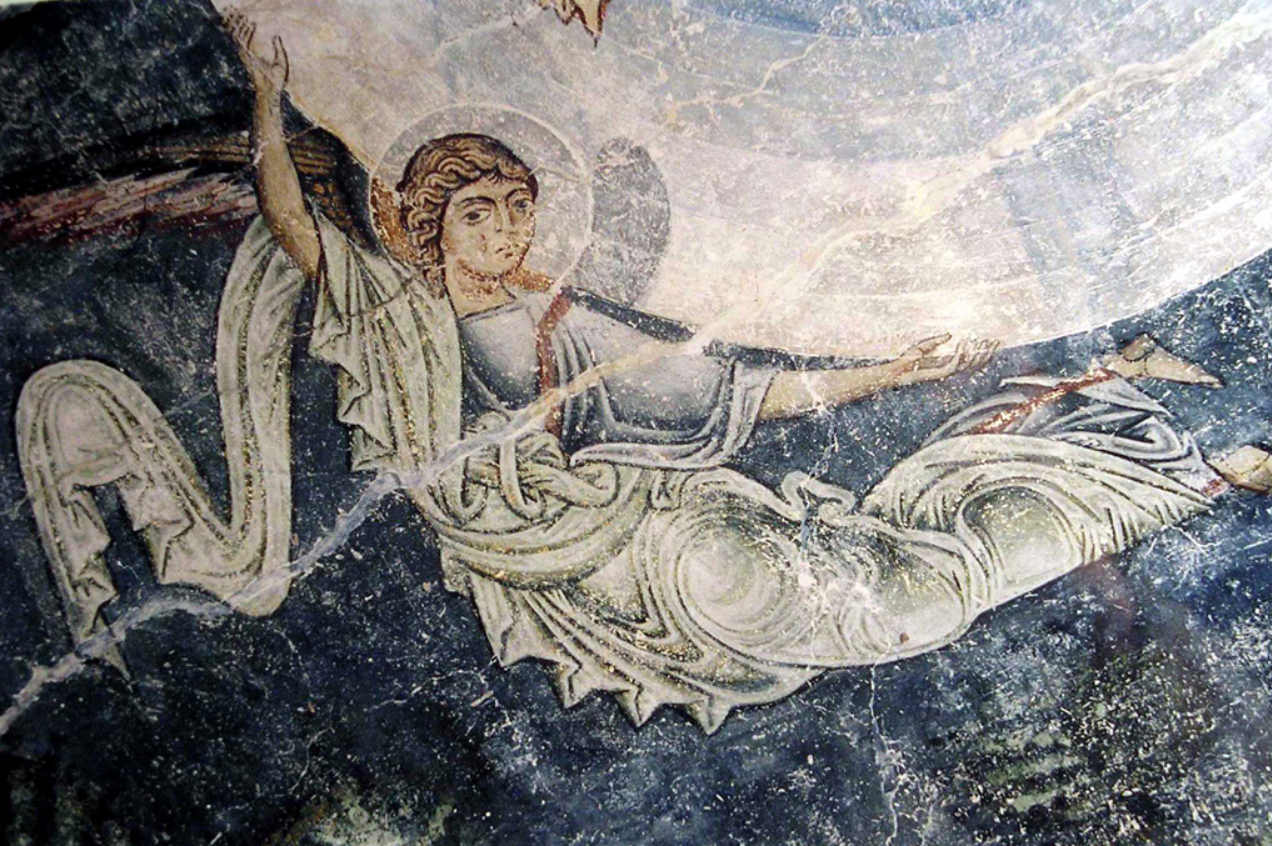
Saint Sophia
The days of the Ice Saints (Eisheilige) is a traditional European folklore meteorological belief which originated in the Middle Ages. It referred to a period of cold weather that brought late frost which could affect Spring planting. Associated with the feast days of Saints Mamertus, Pancras, Servatius, Boniface and Cold Sophia, this folklore advised gardeners to wait until mid-May to plant frost-sensitive crops, specifically after the day of Cold Sophia on May 15, marking the ‘true’ end of winter. While based on folklore, the period often aligns with a genuine drop in temperatures in the Northern Hemisphere around this time. Even today, many German gardeners refuse to plant their seedlings until "Cold Sophia" has had her final say on May 15th.
Another famous weather folklore prediction of the region is Seven Sleepers Day (Siebenschläfertag), a significant European tradition. This folklore predicts that weather on June 27 sets the pattern for the next seven weeks, with the sayings: "If the Seven Sleepers is wet, it rains without ceasing" or "The weather on Seven Sleeper’s Day may remain seven weeks”.
The volatility of spring is best captured by the phrase April does what it wants (April, der macht was er will). In Germany, April is famous for its alternating weather, where a sun-drenched morning can rapidly change to a snowstorm in minutes. This volatile month serves as a reminder that nature doesn't always follow a predictable pattern.
For a more reliable omen, Germans looked to the horizon for Evening Red (Abendrot). The saying "Abendrot, Schönwetterbot" refers to the red sunset as a "messenger of fine weather," signalling that dry, high-pressure air is moving in from the west. It provided a simple, easy to follow metric for farmers that the next day of labour would be greeted by a clear morning.
The Fir/Pine Cone
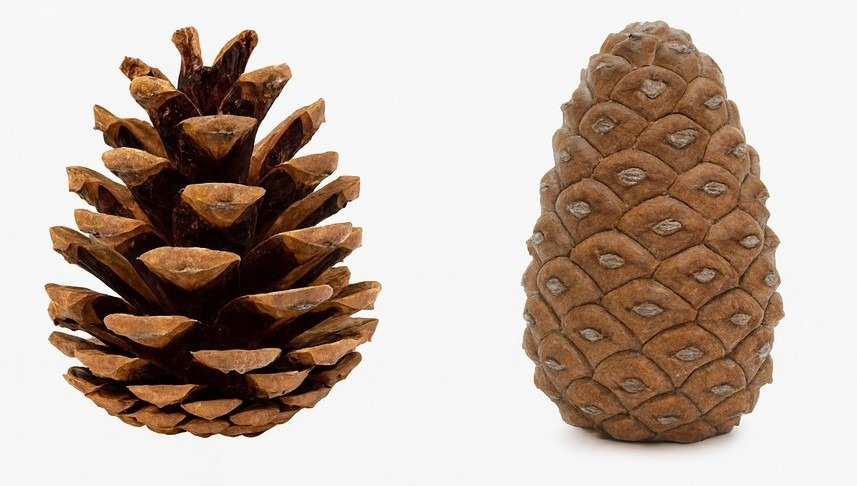
Germans have been using fir or pine cones to measure humidity for centuries, with popular use and documentation dating back to the early 18th century. Otherwise known as Tannenzapfen, the fir cone serves as an early simple natural hygrometer. Even today, it is common to see a single fir cone (or pine cone) sitting on a German windowsill. The scales of the fir cone are designed to open in dry weather to allow seeds to be dispersed by the wind. When the air becomes humid (pre-rain), the scales absorb moisture and swell shut to protect the seeds from falling into the mud. This provided farmers with a semi-reliable weather indicator for the best practice to deal with their crops and livestock, determining whether it was safe to leave hay to dry in the fields. This natural foresight was crucial for preventing rot and ensuring that seeds were sown during the optimal planting window.
Weather Houses
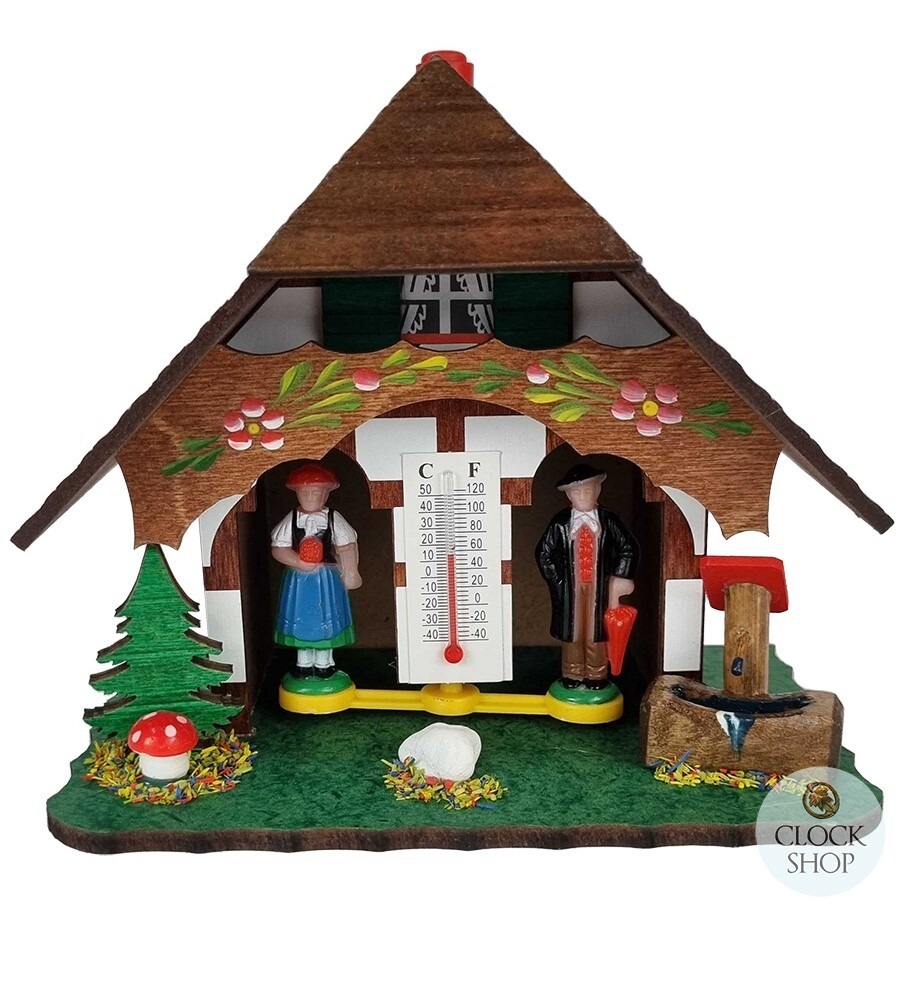
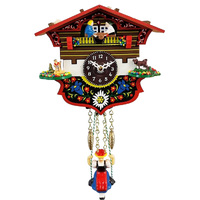
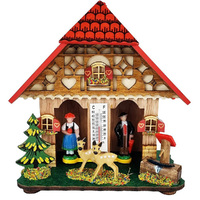
14cm Chalet Weather House Tudor Style By TRENKLE
One of the most iconic early German weather products is the Wetterhäuschen, or Weather House. German weather houses function as a hygrometer, responding to the amount of humidity in the surrounding air. They are often styled like typical alpine chalets found in the southern regions of Germany, Switzerland and Austria. These houses feature two doors and two figurines side by side, including a woman (Sunnemaidl) on the left in a bright coloured dress and a man (Regenmännchen) on the right carrying an umbrella. The figurines are placed on a balance bar, and the movement is guided by a piece of material that is very sensitive to humidity.
Traditional versions use a strip of hair or a similar material under tension; when humidity rises, the material absorbs moisture and changes shape, and when air is drier it relaxes again. That movement is transferred to a balance bar or mechanism that makes the figurines move. When the weather is sunny and dry (low humidity) the female figure comes out of the house, whilst the male hides. When the weather is close to raining and the humidity in the air is higher, the male figure comes out of his door instead with his umbrella, determining the weather for the day.
The effect is simple but clever. Humid air makes the hair or fiber lengthen or loosen slightly, shifting the mechanism, whilst dry air reduces that effect and returns the figures to the opposite position. The device is not a precise forecast machine, but it does offer a visual indicator of changing weather conditions. In order to function properly, the weather house must be placed somewhere exposed to fresh air such as near a window, and away from air conditioning.
They became popular as handmade souvenirs and folk-art objects in Germany, Austria, and Switzerland, with roots generally placed in the late 1700s to early 1800s.
Galileo Thermometers
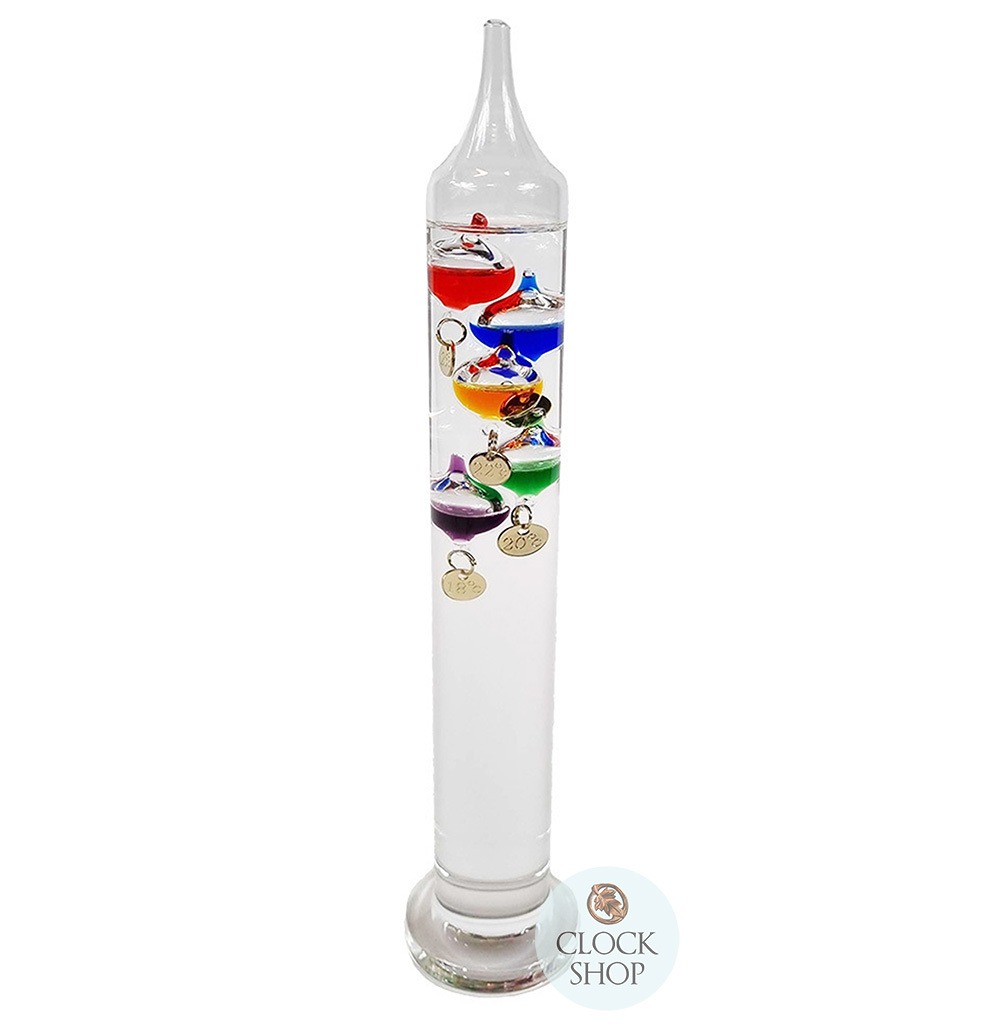
Back in the 1600s, polymath Galileo Galilei discovered a core principle- “The density of a liquid changes in proportion to its temperature”. The subsequent invention of the Galileo Thermometer in the mid-1600s was built on this very idea, and is still popular hundreds of years later.
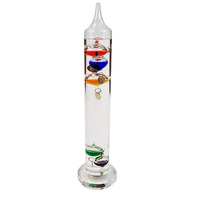
Galileo Thermometers feature a sealed glass cylinder filled with a clear liquid and several weighted glass discs. Each disc is calibrated with a precise amount of fluid and a metal temperature tag, giving it a very specific, fixed density. The device operates on the principle of buoyancy: as the air in the room warms or cools, the density of the liquid inside the cylinder changes by expanding or contracting. When the liquid becomes less dense than a specific bulb, that bulb sinks; as the liquid cools and becomes denser, the bulbs float back to the top. By observing which discs are rising or falling, you can determine the temperature through the "struggle" between the stationary density of the glass and the shifting density of the liquid. The lowest floating disc will read the correct temperature, whilst the others will have either sunk to the bottom or have risen to the top. The German fascination with these devices stems from their historical obsession with "Glaskunst" (glass art). In the 17th and 18th centuries, German scientists were interested in the idea that nature followed "immutable laws" that could be seen. The Galileo thermometer was the ultimate proof of this, adjusting to invisible changes in the room.
Why These Traditions Endured
These objects lasted because they made invisible natural forces like the weather visible through a creative, functional way. A weather house does this with motion, a Galileo thermometer with buoyancy, and weather lore with memorable rhymes and seasonal sayings. They translate complex atmospheric phenomena into something a person can see at a glance or repeat from memory, making them a practical addition to everyday life.
View our full range of German weather instruments here.