

























Haller Uhrenfabrik- A World Leader In Anniversary Clocks
Date Posted:7 January 2026
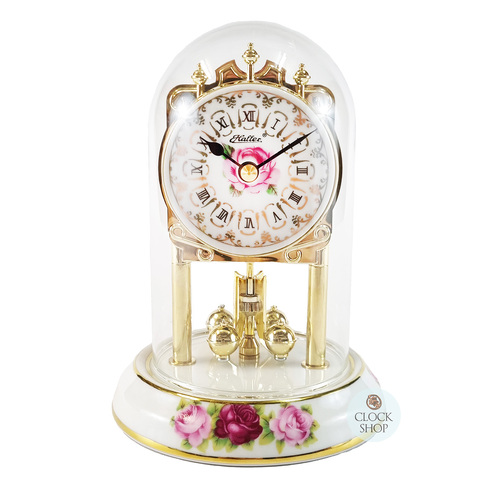

Often referred to as 400-day or torsion pendulum clocks, anniversary clocks are named for their impressive power reserve, which allows them to run for an entire year on a single winding. While many people assume they were specifically created as gifts for special occasions, they were actually engineered with the goal of lasting from one "anniversary" of its winding to the next. Because they can run for up to 400 days without being touched, it became a common tradition for owners to wind them on a memorable annual date, like a birthday or a wedding anniversary, to ensure they never stopped.
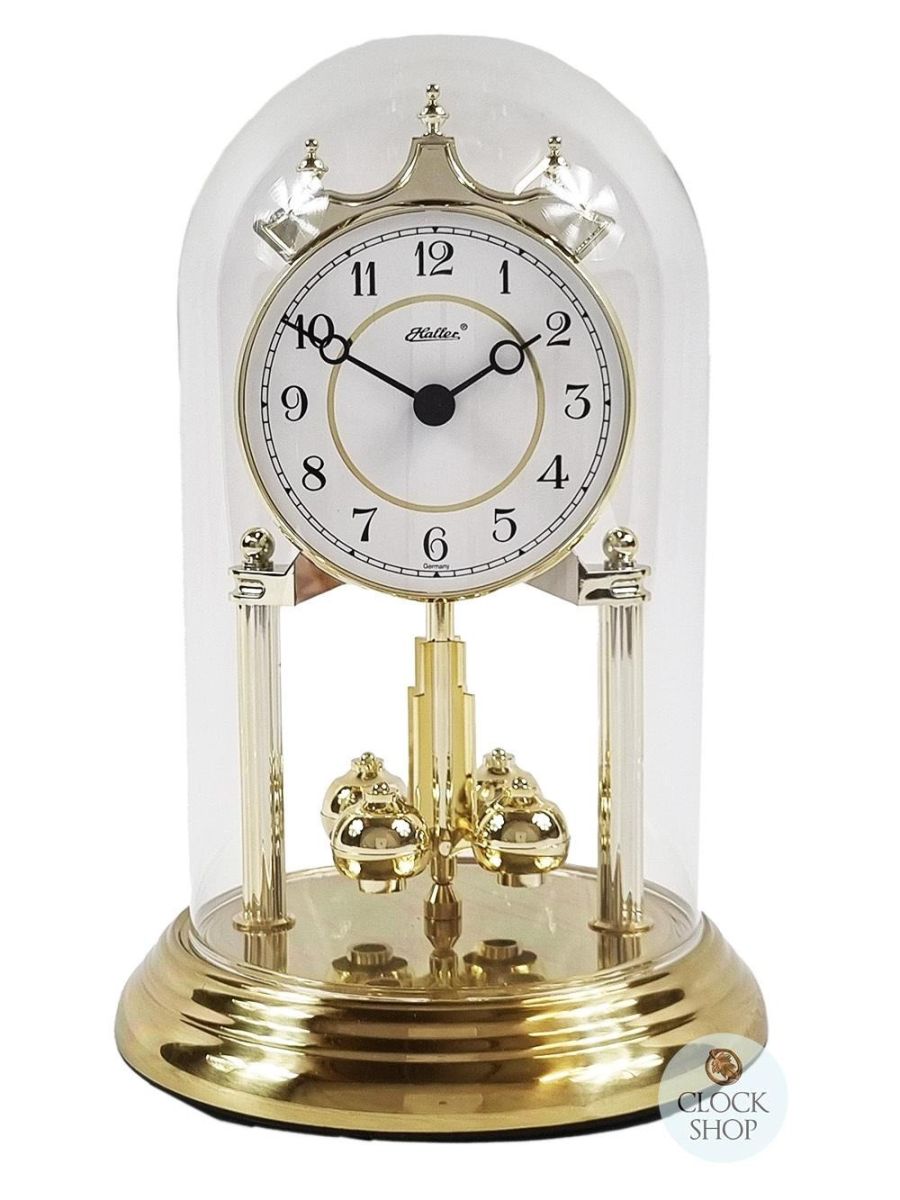
23cm Gold Anniversary Clock With White Dial By HALLER (Arabic)
Invented in the late 19th century, these clocks revolutionised home decor by moving away from the loud ticking of pendulum clocks where the pendulum swings left to right, toward a silent, spinning motion instead, powered by a torsion pendulum.
In 1793, Robert Leslie developed the initial concept of the torsion pendulum. However, it wasn't until 1841 that American inventor Aaron Crane successfully integrated this mechanism into a clock and patented the design. His clocks were impressive for their time, capable of running for an entire year after just one winding. He even applied this technology to high-precision astronomical regulators, though these were niche items and not many sold. Later, between 1879 and 1880, a German inventor named Anton Harder developed and patented his own version of the torsion clock, seemingly without knowledge of Crane’s earlier work, inspired by a rotating chandelier.
A torsion pendulum features a wheel-like assembly, typically with four brass balls on spokes, suspended from a thin vertical wire called a suspension spring. Unlike swinging pendulums, a torsion pendulum rotates slowly clockwise and counterclockwise around the wires axis, twisting the spring to create a restoring torque that sustains oscillation. The clock's gears deliver precise pulses via an escapement to the spring's top, maintaining motion with minimal energy for up to 400 days, while an adjustment screw shifts the balls to fine-tune speed by altering the moment of inertia. Protected by glass domes to shield from air currents, they demand stable environments for accuracy. The weighted balls (aka the pendulum) rotate slowly clockwise and counter-clockwise. Because the rotation meets very little air resistance and the movement is so slow, the clock can run for over a year on a single winding of its mainspring.
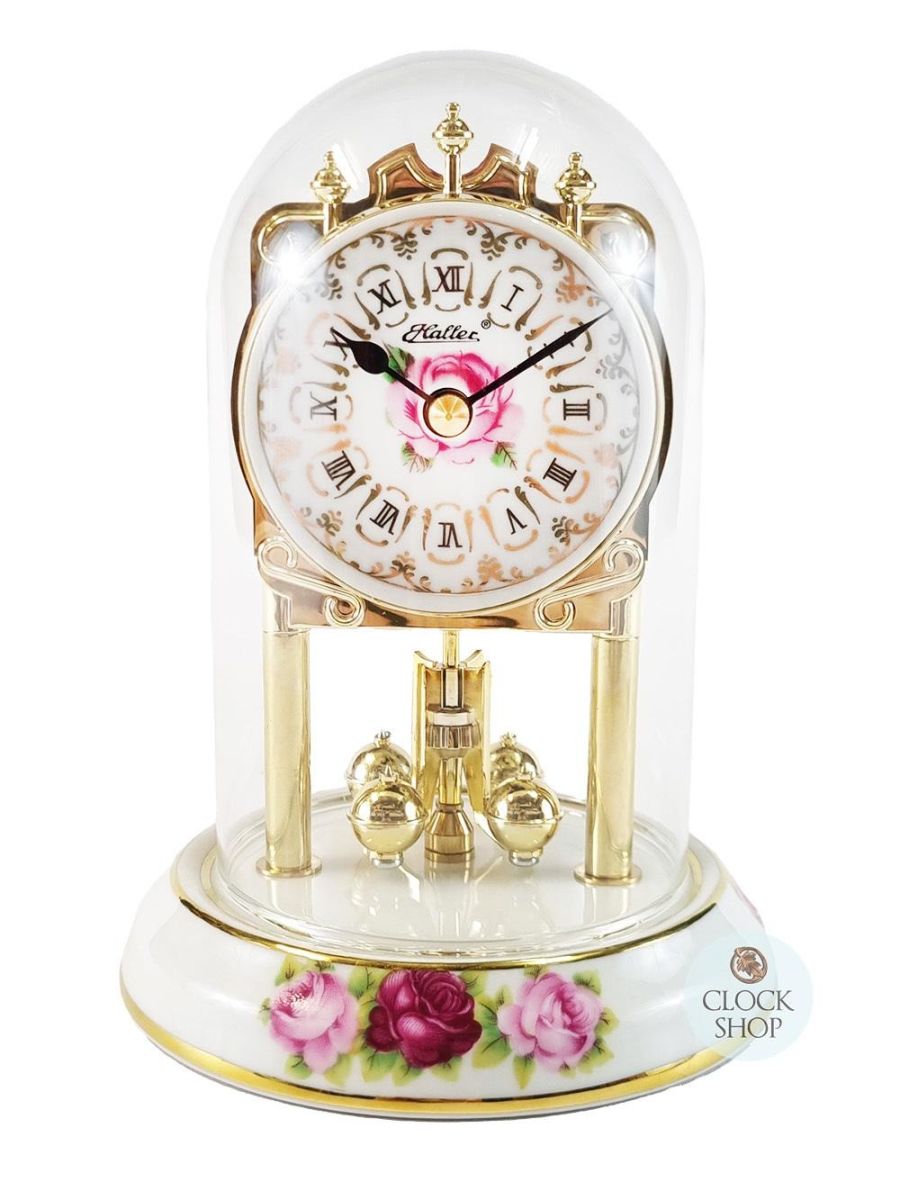
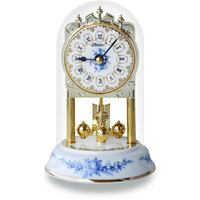
16cm White & Gold Porcelain Anniversary Clock With Floral Detail By HALLER
In the world of anniversary clocks, one name stands out- Haller Uhrenfabrik, who have been crafting clocks & precision timepieces since 1874. Originally founded by Philipp Haller in St. Georgen, in the Black Forest of Germany, the company relocated to Simonswald in 1953, where it continues today under family leadership into the fourth generation. Haller did not begin mass producing their anniversary clocks until Philipp's grandson Siegfried Haller took over the company and the focus turned from wooden clocks towards high-precision anniversary clocks after 1953. It was then that they perfected their torsion pendulum movements, originally developed over a century prior. A major milestone occurred in 1974 when Haller introduced the first electronically controlled (quartz) anniversary clock. This was a breakthrough because it allowed the pendulum to rotate without the fragile "suspension wire" that often broke in traditional mechanical models. Today, most anniversary clocks by Haller are powered by their quartz movement.
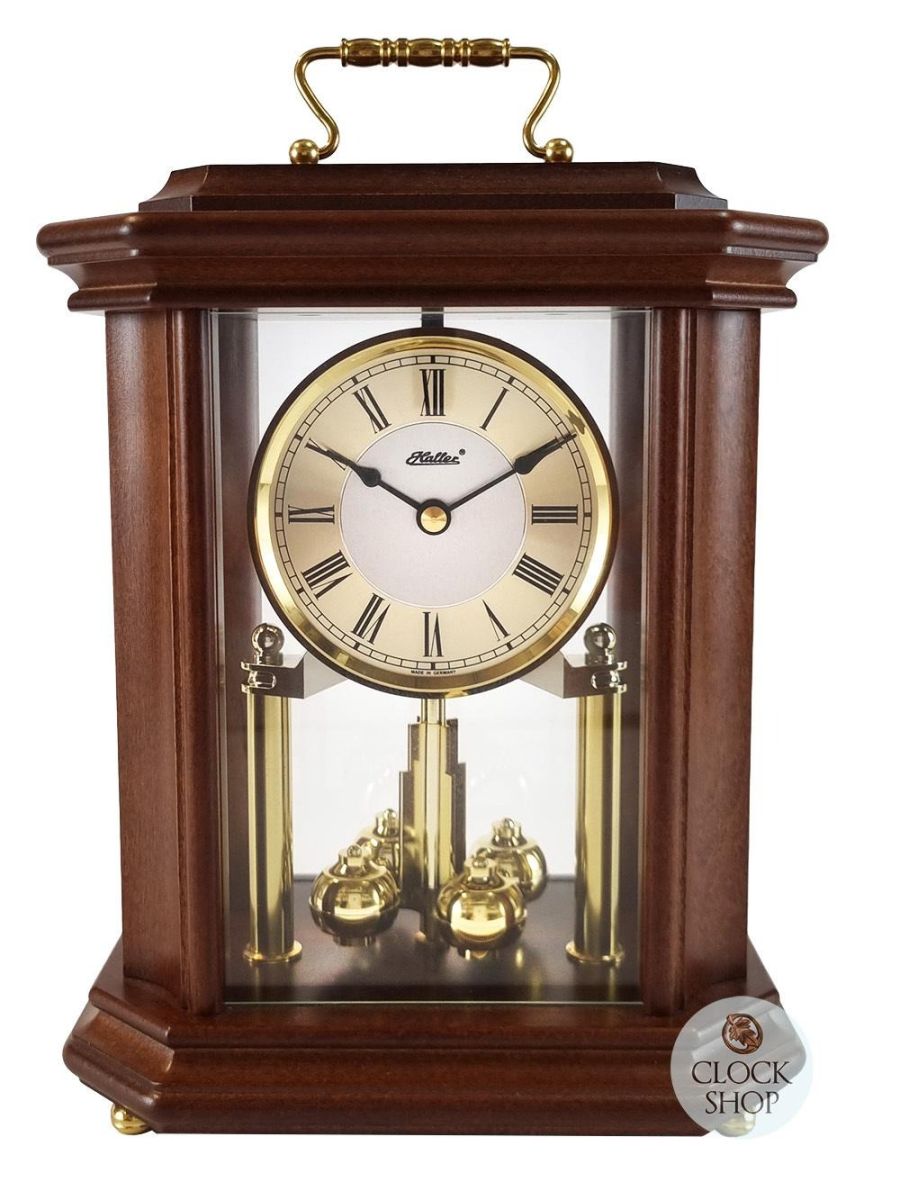
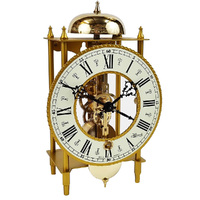
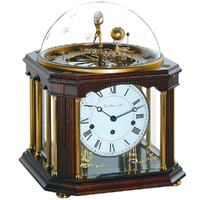
26cm Walnut & Gold Anniversary Carriage Clock By HALLER
For decades Haller has been a global leader in anniversary clock production. Haller designs blend ornate brass bases, polished columns, and faceted crystal glass, often in classic Black Forest styles with high-gloss finishes. The ongoing swing of the brass torsion pendulum adds visual appeal, whilst the modern addition of a quartz movement allows ongoing movement, with the only maintenance required being to change the battery. To stay competitive during the quartz revolution, Haller pivoted to modern industrial techniques that balanced the classic "anniversary" aesthetic with affordability. By replacing finicky mechanical springs with precision quartz movements, they made these clocks more user-friendly for the average home. To maintain a luxury look at a lower price point, Haller utilised electroplated plastic for decorative elements and transitioned from expensive solid brass castings to formed sheet brass. These innovations allowed the brand to replicate the design of the traditional 400-day clocks whilst ensuring the timepieces remained lightweight, reliable, and accessible.
Each Haller anniversary clock is unique, and handcrafted with great attention to detail. For many people they offer memories to the past, where their parents or grandparents also owned these clocks. Haller clocks are precious timepieces that suit everyday life, becoming an eye-catcher in any room. Browse the full collection today.